Date
May 7, 2026
Location
Type
Virtual
A rare disease patient gets diagnosed at Mayo Clinic. Gets labs run through Quest Diagnostics. Follows up at their local hospital. Enrolls in an NIH study. Goes to a nearby emergency room due to a severe side effect from their current treatment.
Five touchpoints. Five separate systems. None of them talking to each other.
For biopharma teams trying to understand the real-world journey of rare disease patients, this isn't a minor inconvenience. It's a fundamental gap in your evidence base.
Most real-world data strategies in rare disease were built around a single source: an EHR network, a claims database, a registry. That made sense when those were the best options available. But rare disease patients are, by definition, a small population spread across hundreds of care settings. Relying on one data source means you're seeing a slice of a slice.
The result: incomplete patient journeys, undercounted populations, and evidence that doesn't hold up when regulators or payers start asking hard questions. Comprehensive rare disease data isn't just about volume, it's about coverage across the full care continuum, structured and unstructured, across every system a patient touches. That's the standard Novellia is built to meet.
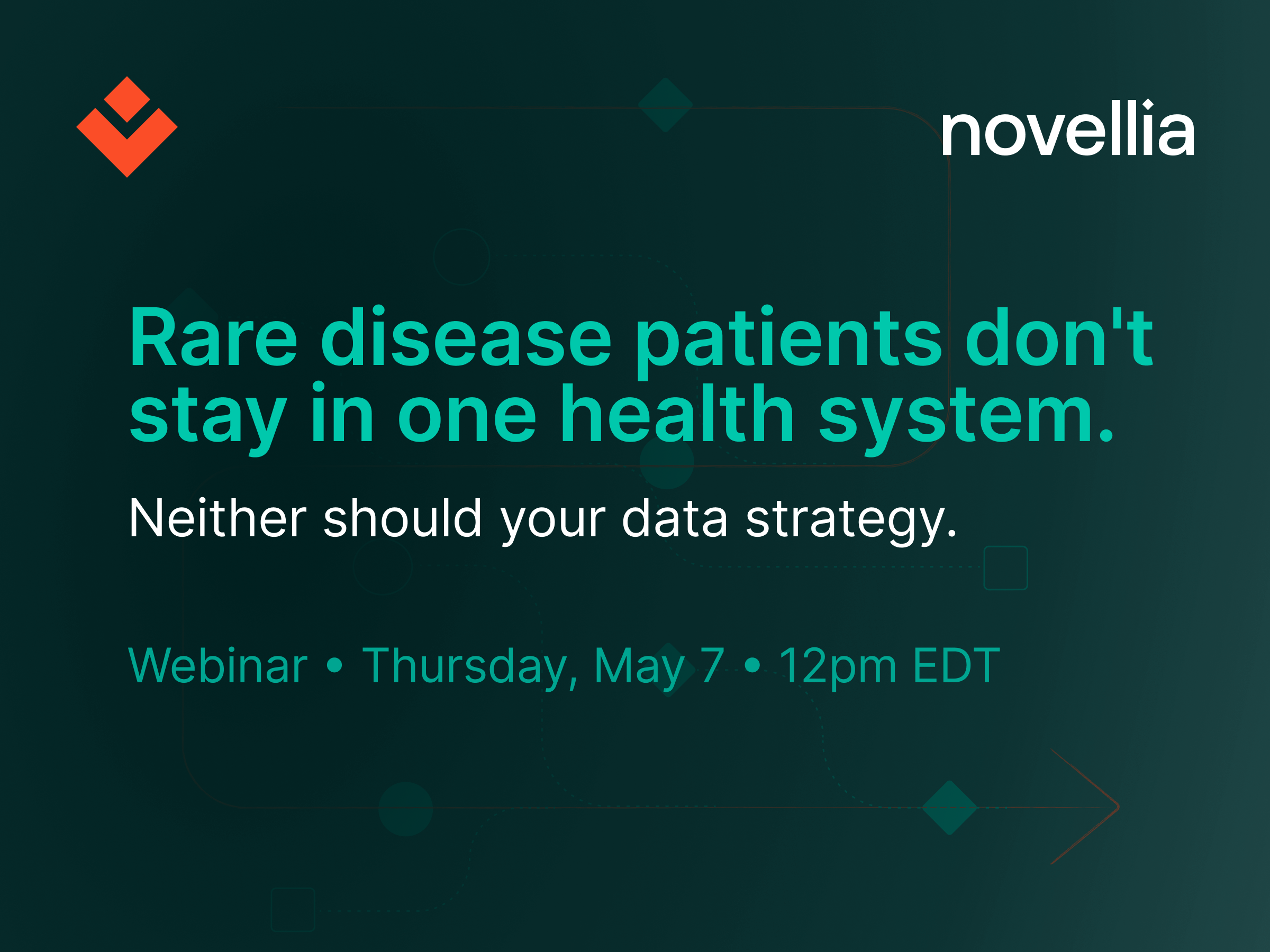
On Thursday, May 7 at 12pm ET, we're hosting a live 30-minute session on what a complete rare disease data strategy actually looks like, how to follow the patient across systems, connect structured and unstructured data, and build evidence that holds up.
We'll cover:
This session is built for Evidence Generation, HEOR, and RWD leaders at pharma and biotech companies working in rare disease.
If rare disease data is part of your work in 2026, this one is worth your time.
Let’s talk about how our patient authorized data can power your next milestone.