

Author
Emily Noronha
Novellia
Date Published
November 16, 2026
At the end of October, several members of the Novellia team and I had the opportunity to attend the NORD Rare Disease and Breakthrough Summit in Washington, D.C. We presented our poster on the fragmentation of health systems for patients with a rare connective tissue disease, Ehlers-Danlos syndrome. We also heard from FDA and NIH policymakers, rare disease pharma executives, advocate groups, caregivers, and rare disease patients themselves. Hearing from the rare disease patients was particularly impactful: They taught me more about the people behind much of Novellia's platform.
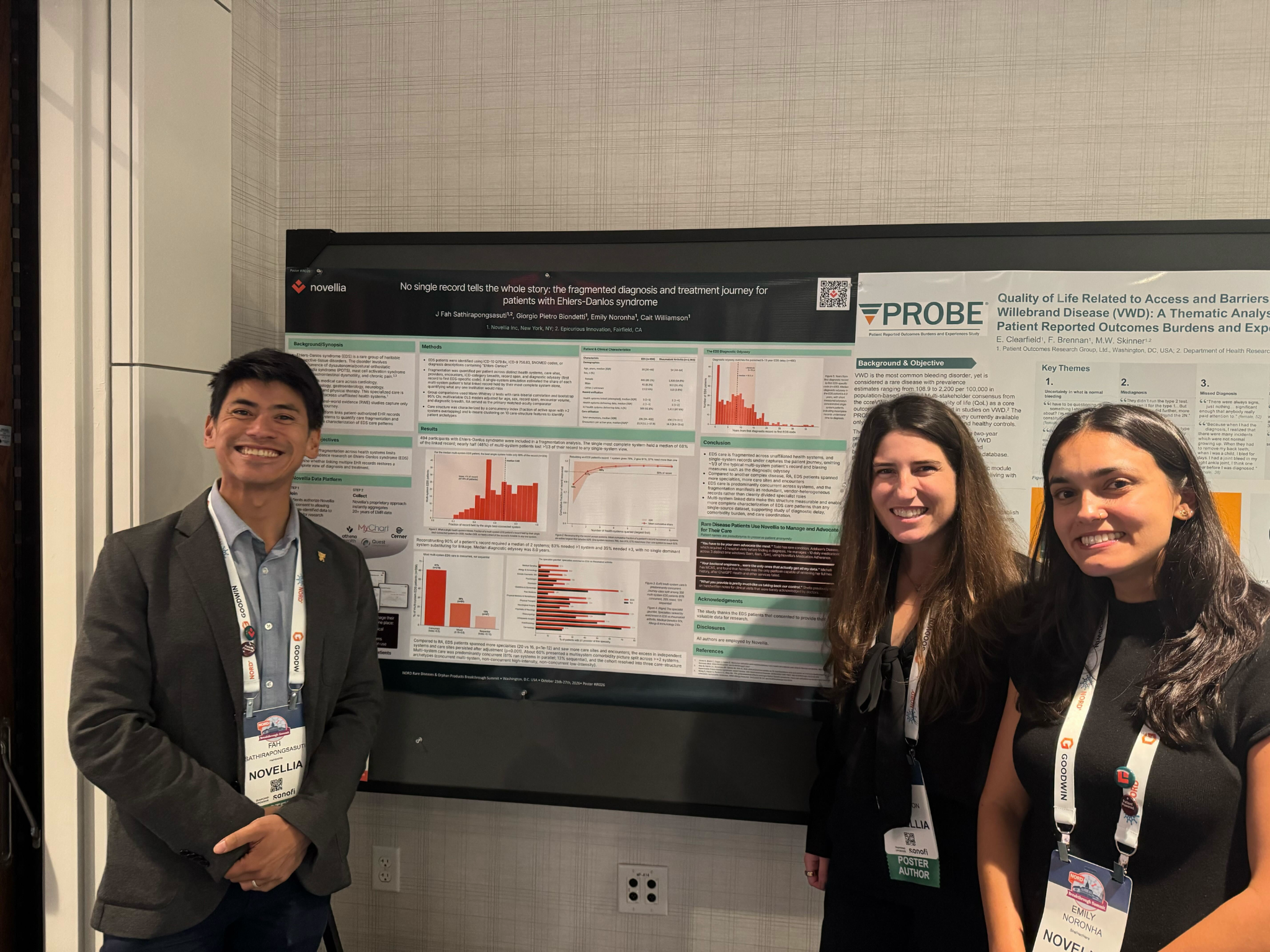
The diagnostic odyssey is the time it takes a patient to finally receive a diagnosis. For rare disease patients, it is much longer than for the average chronic disease patient. We saw this in our own research on Ehlers-Danlos patients, who experience an average diagnostic odyssey of 8 years, but we also heard this reflected from individual patients at the summit. At lunch, our team sat next to a rare disease patient and the mother of a child with a rare disease. Both told me how they went from specialist to specialist, often not knowing what their condition was, before they finally reached a diagnosis through whole genome sequencing. And when they finally got that diagnosis, there was no therapy available.
NORD members and attendees quoted this statistic consistently, from patient advocates to pharma leaders to FDA officials. After such a long diagnostic odyssey, the vast majority of patients still have no approved therapy. This highlighted the important role of real-world evidence: In the absence of approved therapies, natural history studies based on real-world data are crucial to better understand the patient population and the current treatments available.
The FDA defines rare diseases as conditions that affect under 200,000 patients, but in some cases, diseases may be so rare that patients may not know a single other individual with their disease. As a result, clinical trials may not be able to include enough patients to actually determine whether a potential therapy works. During one panel, speakers discussed how patients, advocates, clinicians, and industry need to work together to address the issue. In particular, Uthra Sundaram, senior vice president at Takeda, emphasized that we need to be creative in how we approach clinical research. One exciting promising form of that creativity is how we use real-world evidence.
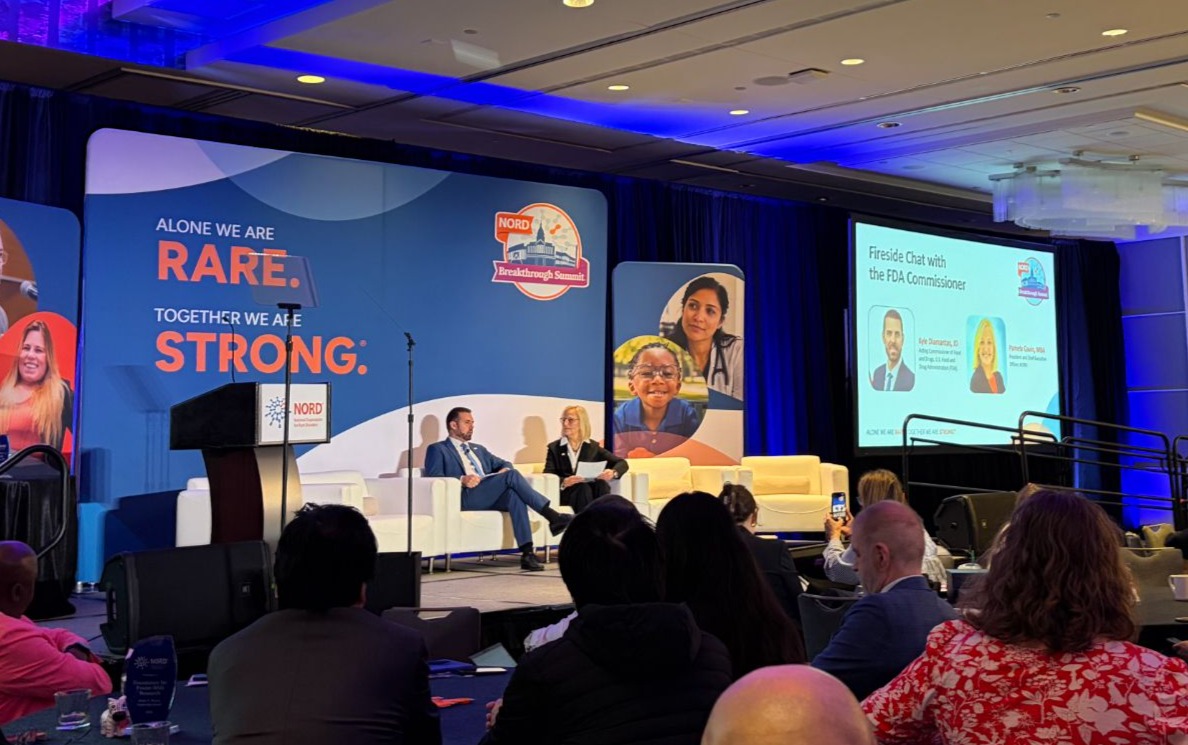
One of the most interesting parts of the day was listening to FDA Commissioner Kyle Diamantas. He advocated for more flexible clinical trial design, including using real world evidence and expanded platform designs. At the poster session, we saw this in practice, with a study using external control arms, or bringing in real-world evidence in place of a traditional control when sample sizes are small. I was excited to see how real-world evidence can help rare disease patients gain access to necessary therapies.
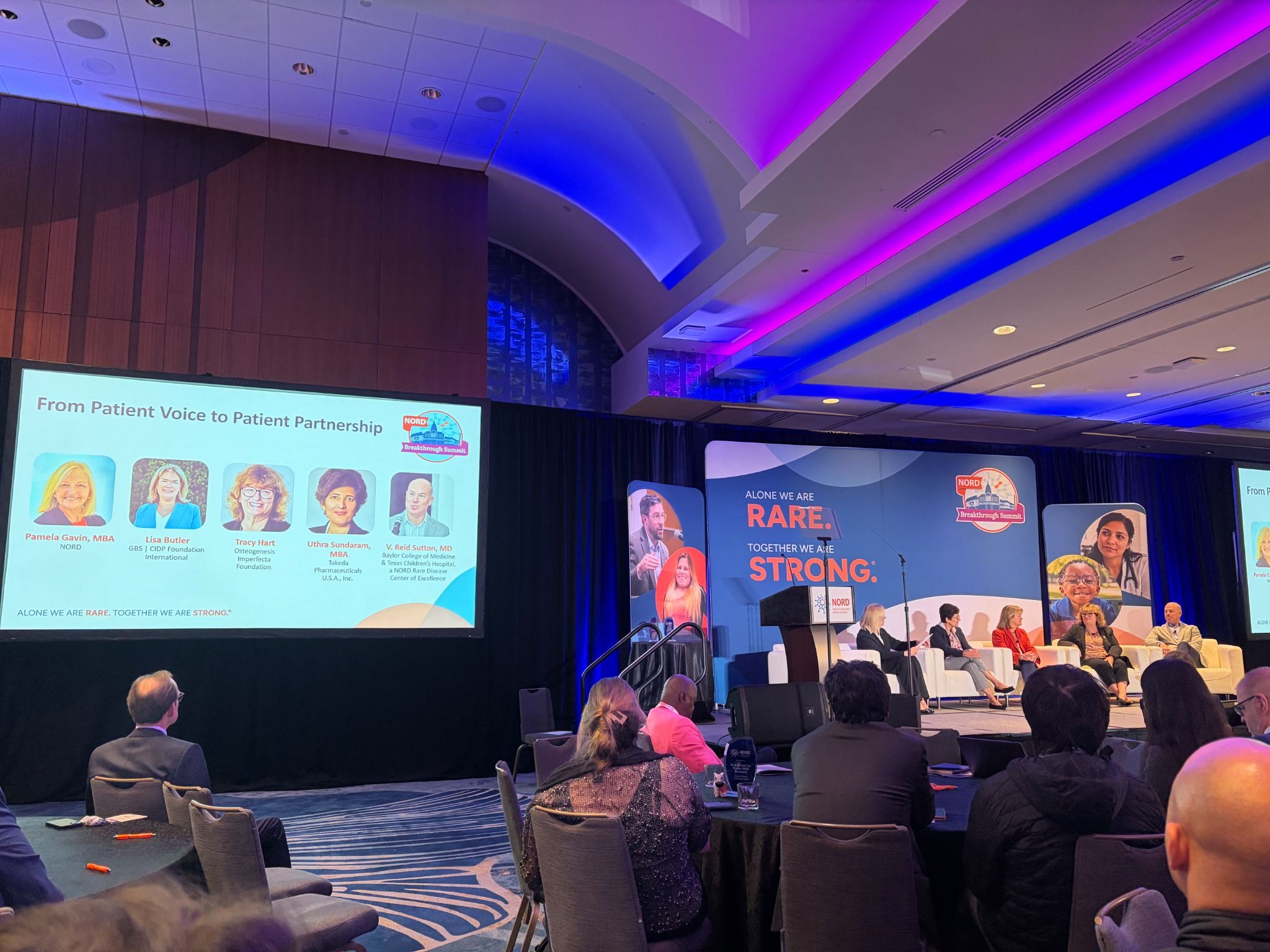
NORD made it clear that patient advocacy groups, pharma companies, and the FDA are prioritizing placing the patient voice central. The importance of this was illustrated when Michelle Tarver of the FDA's Center for Devices and Radiological Health (CDRH) noted, "Patients often say that what the clinician prefers is not what they prefer." An example of this is the need to align on clinical endpoints that are meaningful to the community. My takeaway for real-world evidence research is that we need to think more about how we structurally capture the patient voice, whether it be within ePRO surveys, focus groups, or other assessments.
The NORD Summit brought us closer to the problems faced by the patients we build our platform for, and how every stakeholder can better integrate their voice. It also showed us how Novellia can adapt to serve these patients better. We have already seen this with the 500+ Ehlers-Danlos patients who joined our platform to manage their health records and consent to share their deidentified data for research. NORD further confirmed to our team how we can contribute to research in this space while building a platform for patients to be their own advocates.
About the Author
Emily Noronha is an Associate Solutions Manager on the Client Solutions team at Novellia, where she helps deliver real world evidence solutions to life science partners and implement their research questions. She co-authored Novellia’s poster on health system fragmentation in Ehlers-Danlos syndrome, presented at the NORD Rare Disease and Breakthrough Summit.
Let’s talk about how our patient authorized data can power your next milestone.


