No single record tells the whole story: the fragmented diagnosis and treatment journey for patients with Ehlers-Danlos syndrome
Publication
Author
Team Novellia
Date Published
October 26, 2026
New research shows that linking patient-authorized health records across systems restores the complete diagnosis and treatment journey for people with Ehlers-Danlos syndrome, revealing care fragmentation and an 8-year median time to diagnosis that single-system data understates
Novellia’s real-world analysis of 494 patients with EDS were presented today at the NORD Rare Diseases & Orphan Products Breakthrough Summit in Washington, D.C.

Ehlers-Danlos syndrome (EDS) is a group of rare genetic connective-tissue disorders that cause joint hypermobility, stretchy skin, and tissue fragility. It often co-occurs with dysautonomia and postural orthostatic tachycardia syndrome (POTS), mast cell activation syndrome (MCAS), gastrointestinal dysmotility, and chronic pain.1 Patients with EDS must seek care across cardiology, allergy and immunology, gastroenterology, neurology, rheumatology, and physical therapy, often at health systems that do not share records.2,3 Real-world evidence studies built on one health system's data therefore capture only part of the patient's story. We asked two questions: how much does fragmentation limit RWE research in EDS, and does linking multiple EHR records restore a complete view of diagnosis and treatment?
Patients joined the Novellia platform to manage their health and consented to de-identified research use. Novellia then de-identified, harmonized, and standardized EHR data into research-ready datasets.
494 patients with EDS were identified using ICD-10, SNOMED codes, or diagnosis descriptions containing "Ehlers-Danlos." For each patient, we measured their fragmentation: how many health systems, care sites, providers, and encounters their care involved, the range of conditions recorded, the length of their record, and their the time from their first record to their first EDS-specific diagnosis, or diagnostic odyssey. We also simulated what any one health system would see on its own, to show how much of a patient's journey a single institution would miss. We chose rheumatoid arthritis as a comparator to EDS as it is another complex, multi-specialty condition.
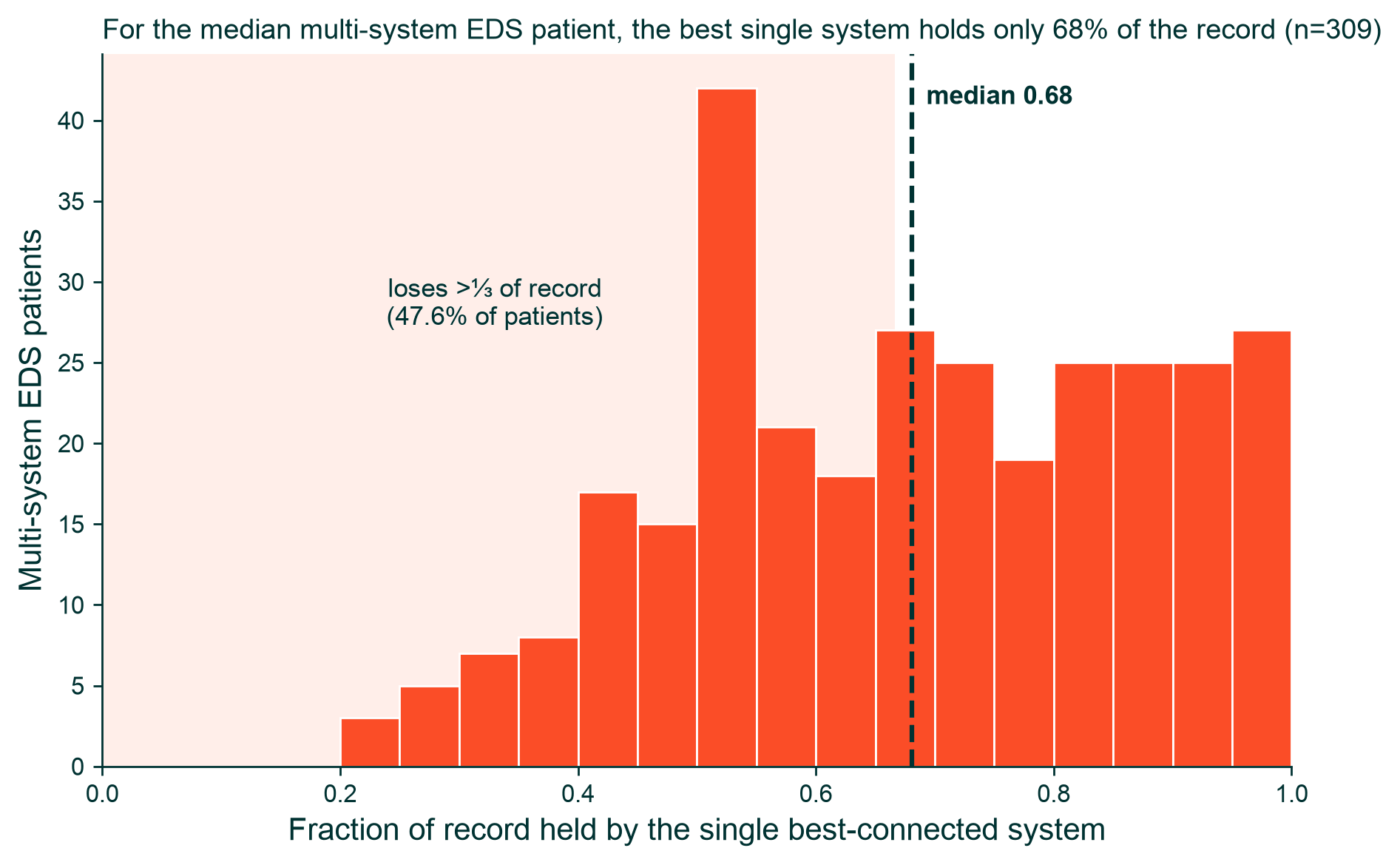
A single health system sees only part of the patient. For patients with data from two or more systems, the best-connected system held a median of 68% of their record. Nearly half (48%) lost more than a third of their record to any single-system view.
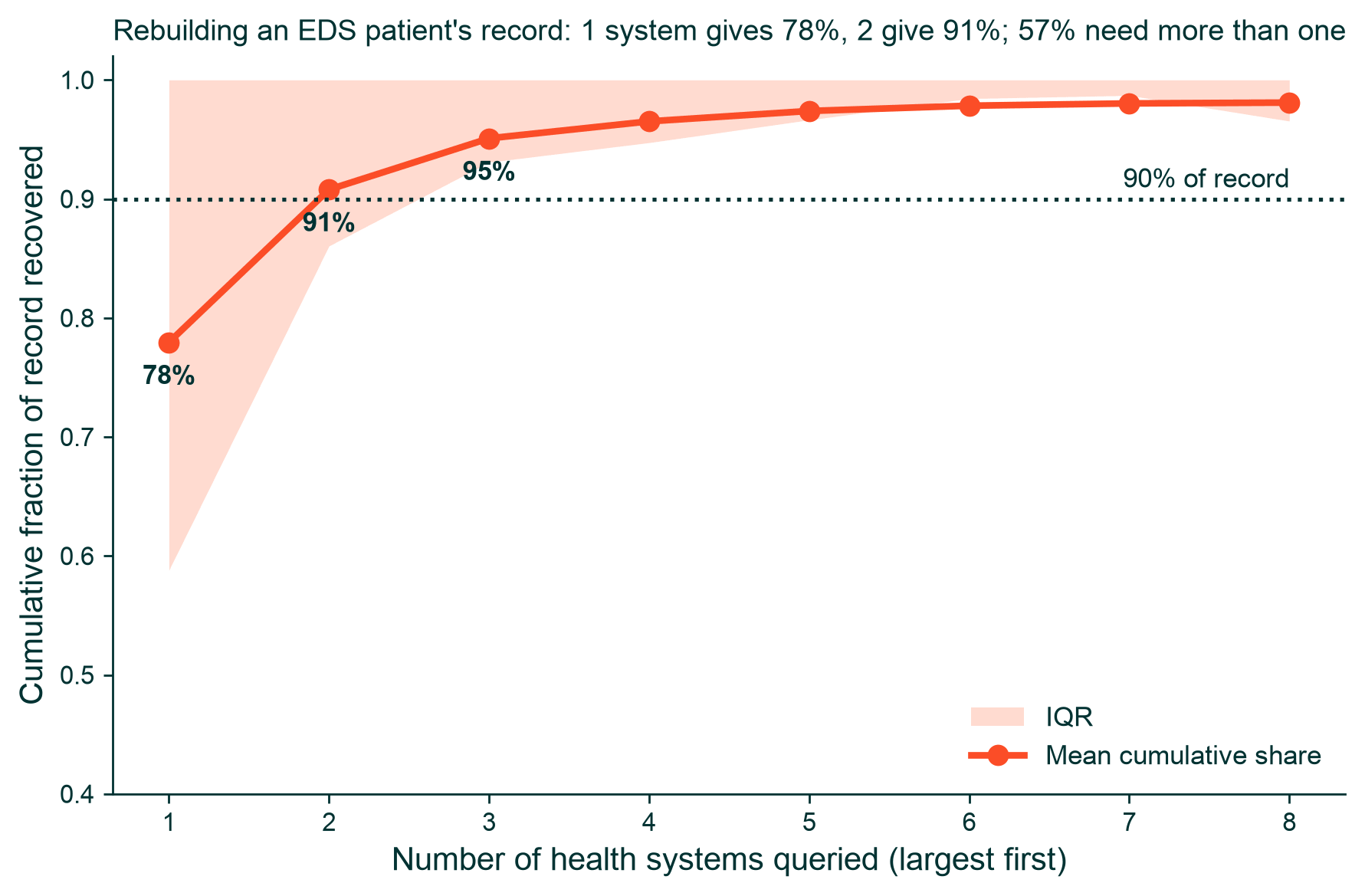
Linking records rebuilds the journey. Capturing 90% of a patient's record took a median of 2 systems, and 57% of patients needed more than one. No single system could stand in for linkage.

Time to diagnosis is long, and single-source data understates it. The median time from a patient's first diagnostic record to their first EDS-specific code was 8.0 years. Shorter timelines clustered among patients with data from only one system, which suggests incomplete records understate time to diagnosis.
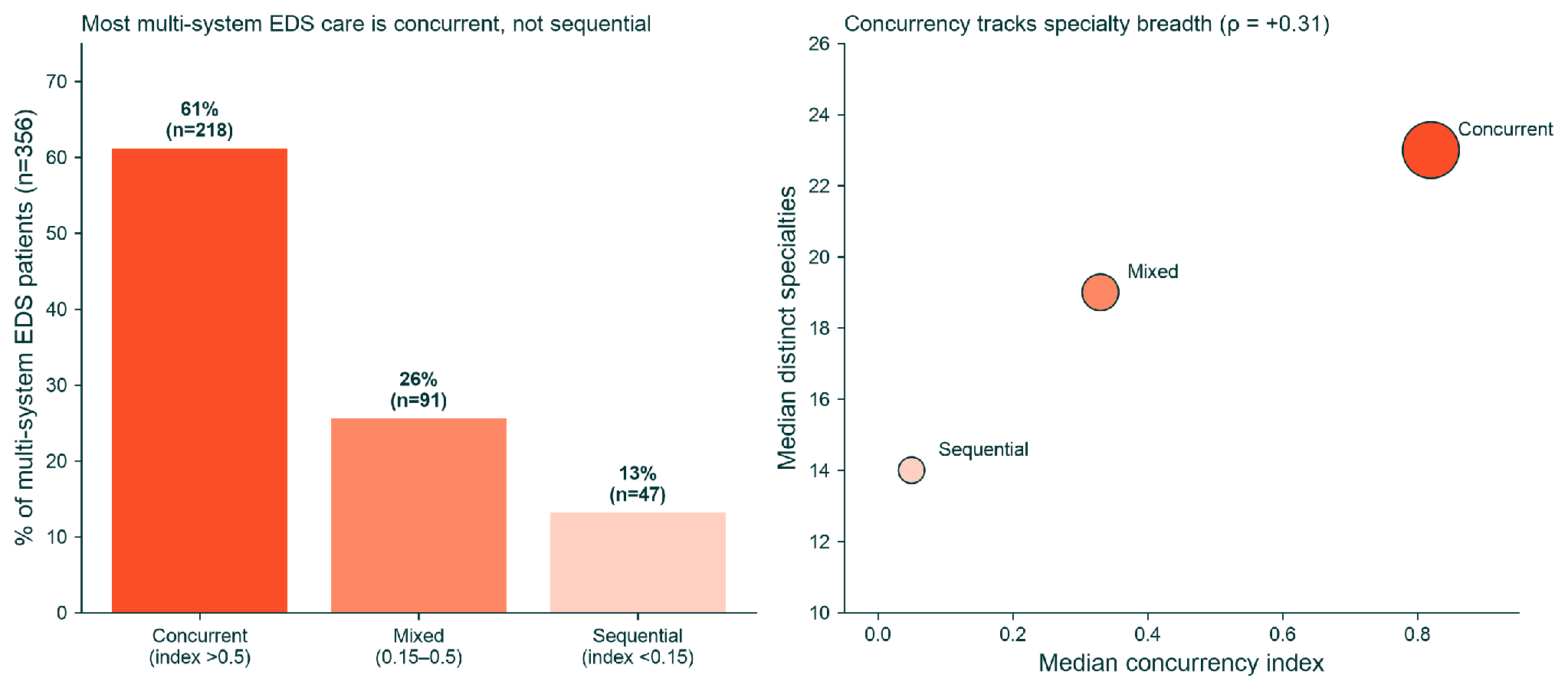
Care runs in parallel. Among patients treated at multiple systems, 61% received care at several systems at the same time, 26% showed a mix, and 13% moved from one system to the next. Patients fell into three care patterns: concurrent multi-system, high-intensity single-track, and low-intensity single-track.
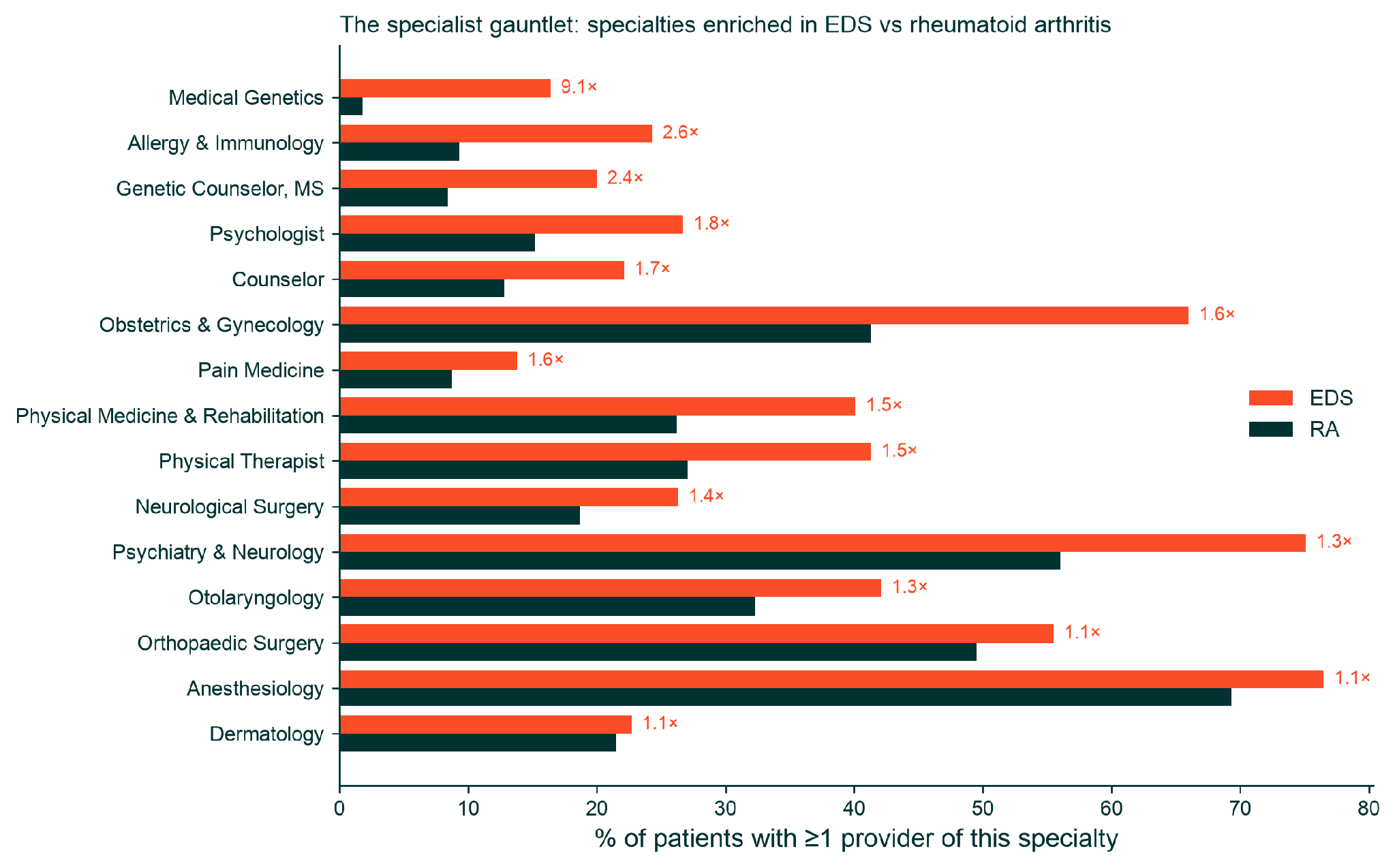
EDS patients see more specialists than RA patients. They saw 20 specialties versus 16, with more care sites and more encounters. The gap held after accounting for differences in age, sex, and overall care volume.
In EDS, a dataset from a single health system misses roughly a third of the typical multi-system patient's record. Nearly half of multi-system patients lose more than a third of their record to any one system. Missing records can skew measures like time to diagnosis: the median diagnostic odyssey was 8.0 years, and the shortest measured odysseys concentrated in single-system patients, which suggests incomplete records understate how long diagnosis takes.
For people living with a rare disease, the path to answers often depends on how well information moves between clinicians. EDS patients in our analysis spanned 20 different specialties, and most received care at several health systems at the same time. When each specialist holds only part of the history, no one sees the whole patient. Research built on single-system data can overlook this, so the burden of rare disease may be underestimated and the true length of the diagnostic journey understated.
This is one of the problems Novellia is built to address: Patients authorize Novellia to gather their records from every health system they use, drawing on more than 20 years of EHR data, and manage their care in one place: organizing records, tracking symptoms, and logging medication use. With patient consent, the same data becomes de-identified, research-ready datasets that show what no single health system can. As one patient with MCAS, another rare disease, who used the Novellia platform, noted, Novellia was "the only platform capable of retrieving her full health history."
We thank the EDS patients who consented to share their data for research.
Let’s talk about how our patient authorized data can power your next milestone.